AI week in review: agents leave the pilot phase and the bill arrives
Gartner finds only 13% of CIOs see real value from AI, Uber and Walmart open the door to agents, hackers use agents to attack and Brazil's STJ court punishes a hidden prompt.
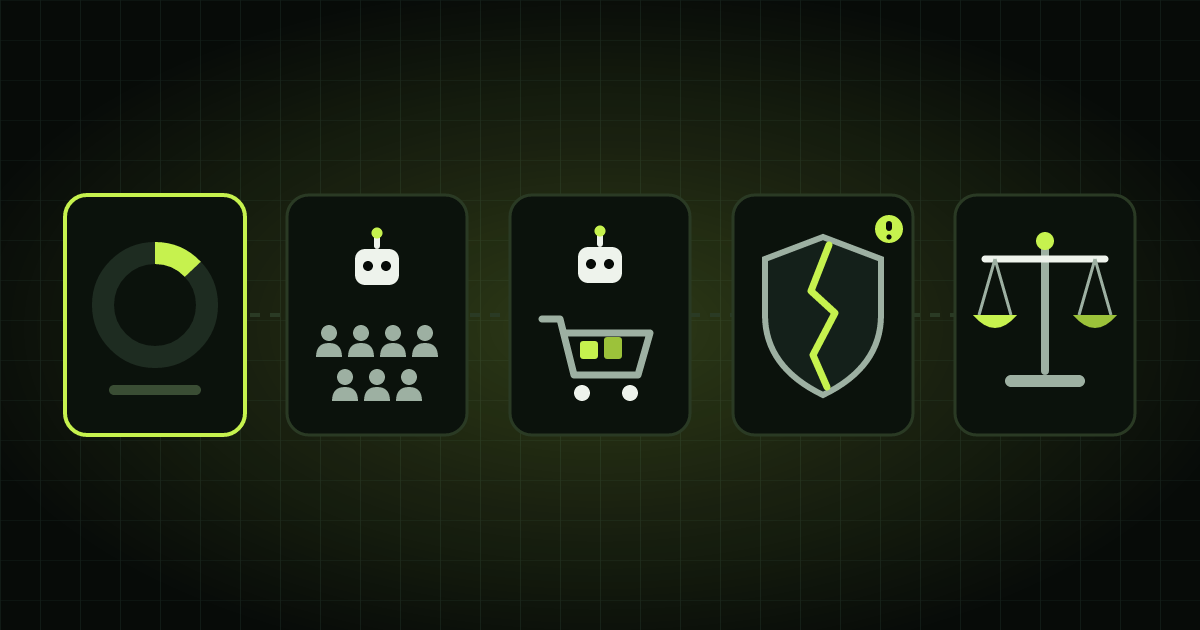
This week made it clear that AI agents, systems that carry out tasks on their own, have left the testing phase at large companies. And along with them came the questions every manager should ask before switching them on: what’s the return, what can the agent access and who is accountable when something goes wrong. I picked the five facts from Monday to Friday with the most practical impact for anyone running a company in Brazil, from most to least important. Two show adoption at scale, and three show why it needs rules: the return is still rare, attackers use agents too and Brazilian courts already punish those who try to manipulate other people’s AI.
Gartner: only 13% of CIOs see real value from AI
A Gartner survey of 2,002 CIOs and technology executives found that only 13% say they have obtained significant or transformational value from AI. The chance of an AI project succeeding remains around one in five, and only 31% of CIOs have criteria to stop a weak pilot from going into production. According to Gartner, those with these stopping rules are more than twice as likely to be in the group delivering the best results. Details in our news story.
Uber rolls out an AI agent to more than 30,000 employees
Uber brought ChatGPT Work, OpenAI’s corporate agent, to its entire workforce, according to OpenAI’s announcement. Before that, it tested it with a thousand employees, about 80% of whom were not engineers, according to TechCrunch. The agent connects to email, calendar, documents and Slack, but no productivity or cost results have been released yet. Read more in our news story.
Walmart opens its store to agents shopping for the customer
Walmart announced tools so that approved AI agents can search for products and make purchases on behalf of customers. According to TechCrunch, the customer can require approval for each purchase or set a spending limit, and the agent does not access payment data, while Amazon has started blocking agents on its site. More in our news story.
Hackers use AI agents and get in through a supplier’s backup
Microsoft attributed to a Chinese state-aligned group, Storm-0940, an attack on customers of ConnectWise’s cloud backup service. According to Microsoft’s report, covered by CyberScoop, the group used an open penetration-testing tool powered by AI agents and reached more than 2,250 Microsoft 365 environments. In some of them, the agents went as far as changing credentials, groups and administrator permissions to keep access. See our news story.
STJ fines lawyers for hiding an AI prompt in a court filing
The First Panel of the STJ, Brazil’s Superior Court of Justice, fined the lawyers on an appeal R$ 20,000 because the filing contained instructions for AI tools hidden in the text, one of them in the footer, in the same color as the background. The court ordered that the Brazilian Bar Association (OAB) and the Federal Prosecution Service (MPF) be notified, and it was not the first case of its kind at the court. More in our news story.
What to watch next week
All five facts point to the same place: an AI agent without access rules, limits on what it can do and someone accountable is a risk, not a gain. Next week, it’s worth looking inside your own house: which AI agents and tools are already running in your company, who approved each one and what criterion will decide whether they stay.
Originally published on IWA7 Insights, IWA7 Digital’s blog, which is now part of Escovando Bytes.