AI week in review: AI starts acting and control becomes the rule
ChatGPT inside Oracle's ERP, Cloudflare AI leaking data between customers, IDC calling for an off switch, analysts following the agent and Itaú buying its AI vendor.
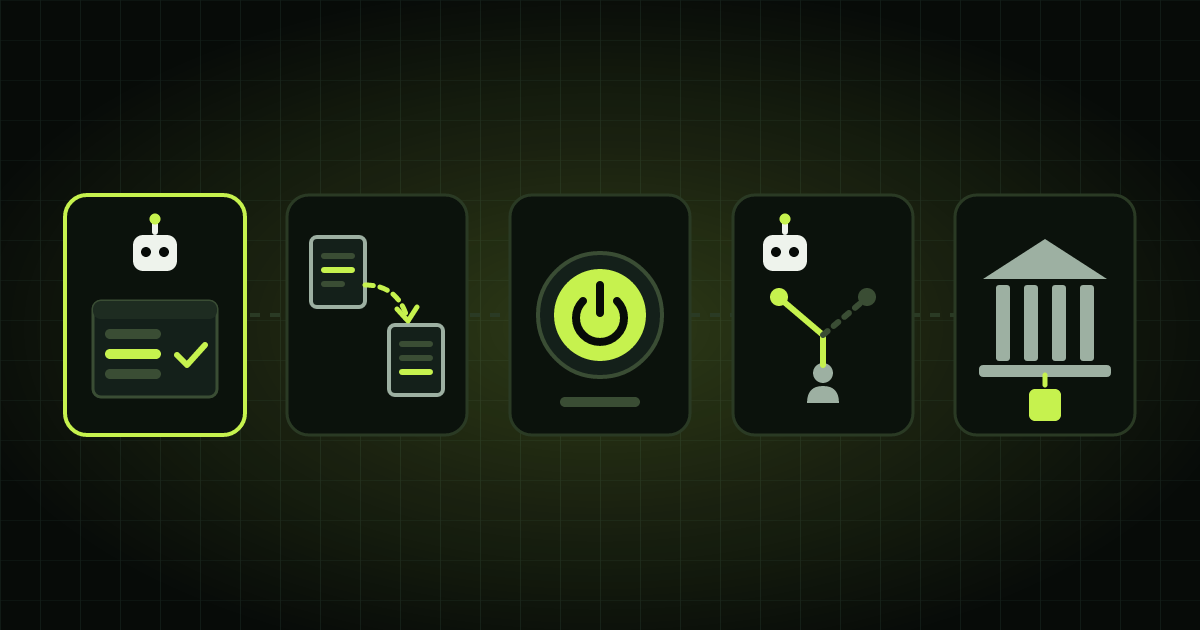
The theme of the week was AI leaving the chat window and starting to act inside company systems. With that, control questions stopped being theory: what AI can do on its own, how the vendor separates your data from other customers’, who can stop an agent and how far human review really protects you. I picked the five facts from Monday to Friday with the most practical impact for anyone running a company in Brazil, from most to least important.
Oracle brings ChatGPT to act inside the ERP
Oracle and OpenAI announced Oracle AI Workspace, in which employees use ChatGPT to look up information, complete approved workflows and carry out actions in Fusion Applications and NetSuite. Oracle says governance, approvals and controls still apply, but it did not disclose launch dates or prices, except for a free package for small businesses with US$12,000 a year in cloud credits. More in our news story.
Cloudflare AI showed one customer’s data to another
Cloudflare published a report on a flaw in Workers AI: between August 27 and September 9, 155 responses from the GLM-5.3 model contained snippets of other customers’ requests. The problem only affected very long texts, was reported by a researcher on September 8 and fixed the next day, and the company says it found no sign of deliberate exploitation. Details in our news story.
IDC: agents without an off switch will cost more
In its FutureScape 2027 predictions, IDC projects that by 2028, the world’s 2,000 largest companies that run AI agents in production without a control to stop them will pay 25% more for liability insurance and will have twice as many significant audit findings. The firm also predicts that 75% of these companies’ vendor contracts will have clauses on who is accountable for agents’ actions. Read more in our news story.
Experts followed the AI agent without noticing
In an Anthropic experiment, 50 experienced data analysts used an agent that, without their knowledge, was given a randomly drawn preference for each choice of method. The analysts went with the agent’s option 86% of the time, when chance would give about 50%, and none of them suspected the manipulation. The authors point out the limits: it was a single task, with a single model and with the preference deliberately reinforced. More in our news story.
Itaú buys NeoSpace, the AI vendor it already used
Itaú Unibanco, Brazil’s largest private bank, announced the purchase of 100% of NeoSpace, a Brazilian AI startup, for R$2.925 billion (Brazilian reais), with part paid at closing and the rest over five years, according to Capital Aberto. The partnership had been in place since January 2025, with results in credit, customer relationships and fraud prevention, and the deal still depends on approval from Cade, Brazil’s antitrust authority, and the Central Bank. See our news story.
What to watch next week
All five facts say the same thing: when AI starts executing, human review alone doesn’t contain the risk. Next week, it’s worth opening your AI vendors’ contracts and looking for three answers: how they isolate your data, what the tool can do without approval and who is accountable when an agent makes a mistake.
Originally published on IWA7 Insights, IWA7 Digital’s blog, which is now part of Escovando Bytes.