Argo CD: the deploy that fixes itself
What Argo CD is, how it changes the traditional way of putting systems online and why Git became the blueprint. Explained for people who aren't in tech.
You know that Friday 6 p.m. deploy? Someone runs a command on the server, checks that the site loads, says a little prayer and goes home. On Monday, a problem shows up and the investigation begins: who changed what, when, and what exactly was done?
A deploy, for people outside tech, is the moment a new version of a system goes live. And Argo CD exists so that this moment no longer depends on someone typing commands. Instead of a person (or a script) pushing the system onto the server, the environment itself looks at an agreed-upon place and adjusts itself until it matches what’s written there.
First, three words
To understand Argo CD, it helps to unpack the definition in the official documentation: a declarative, GitOps continuous delivery tool for Kubernetes. Piece by piece:
- Kubernetes is the “building manager” of a building full of servers. It decides which machine each piece of the system runs on, restarts whatever crashes and creates copies when traffic grows. The group of machines it manages is called a cluster.
- Declarative means you don’t write the step-by-step recipe. You describe what the result should look like (“three copies of the site, on version 2.4”) and the tool figures out how to get there.
- Git is the version history programmers use to store code: you can see who changed what, when, and go back to any point.
An idea with a name: GitOps
Putting those pieces together has a name. It was at Weaveworks, a software company, that CEO Alexis Richardson named the practice GitOps, in a 2017 piece called “Operations by Pull Request”. A year later, he summed up the idea in another post on the company blog: the Git repository is the single source of truth about how the system should be, and every change goes through it.
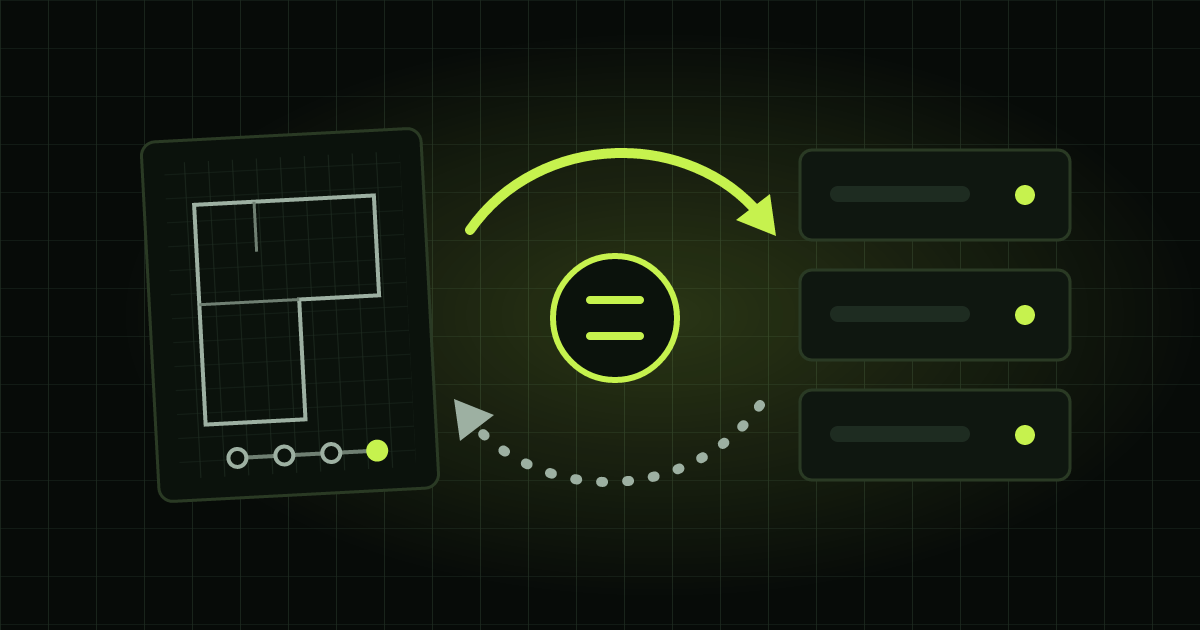
The analogy I like best is a construction site. Git is the blueprint of the house. Argo CD is a foreman who stays on site 24 hours a day, comparing the building with the blueprint. If someone knocks down a wall that’s in the blueprint, he notices and raises the alarm, or rebuilds it. If the architect changes the blueprint, he carries out the change.
Where Argo CD came from
The Argo project was created and open-sourced in 2017 by Applatix, a startup later acquired by Intuit, according to the CNCF announcement (the CNCF is the foundation that looks after Kubernetes and similar projects). Argo CD is one member of that family.
The project joined the CNCF in April 2020 and, on December 6, 2022, reached the foundation’s highest maturity level, the same as Kubernetes itself. At the time, more than 350 organizations were already using Argo in production, including Adobe, Capital One, Google, Tesla and Volvo, according to the same announcement.
How it works inside
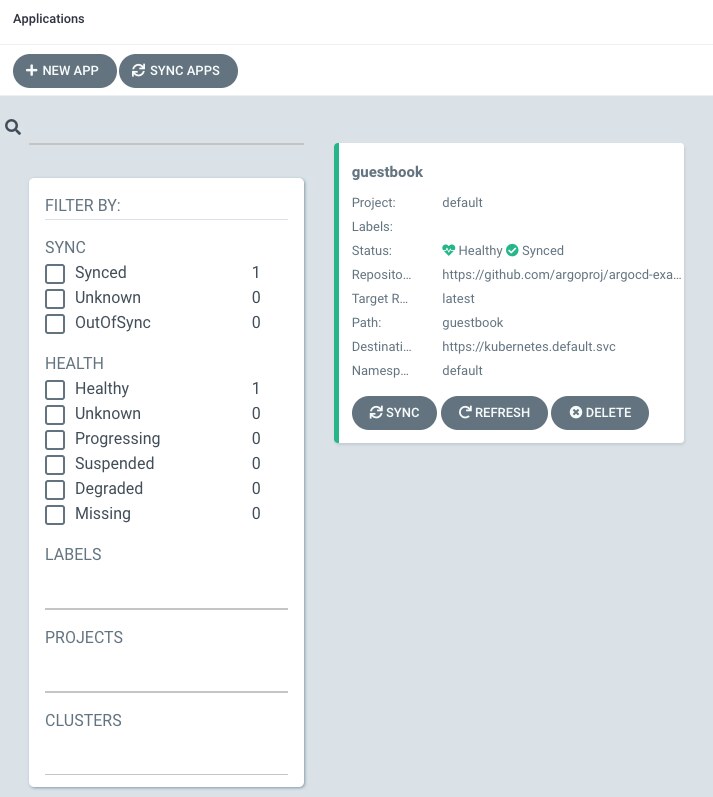
Argo CD runs inside Kubernetes itself and does one thing all the time: it compares the desired state (what’s in Git) with the live state (what’s actually running). When the two match, the application shows as synced. When someone changes something in Git, or tinkers directly with the server, it becomes OutOfSync.
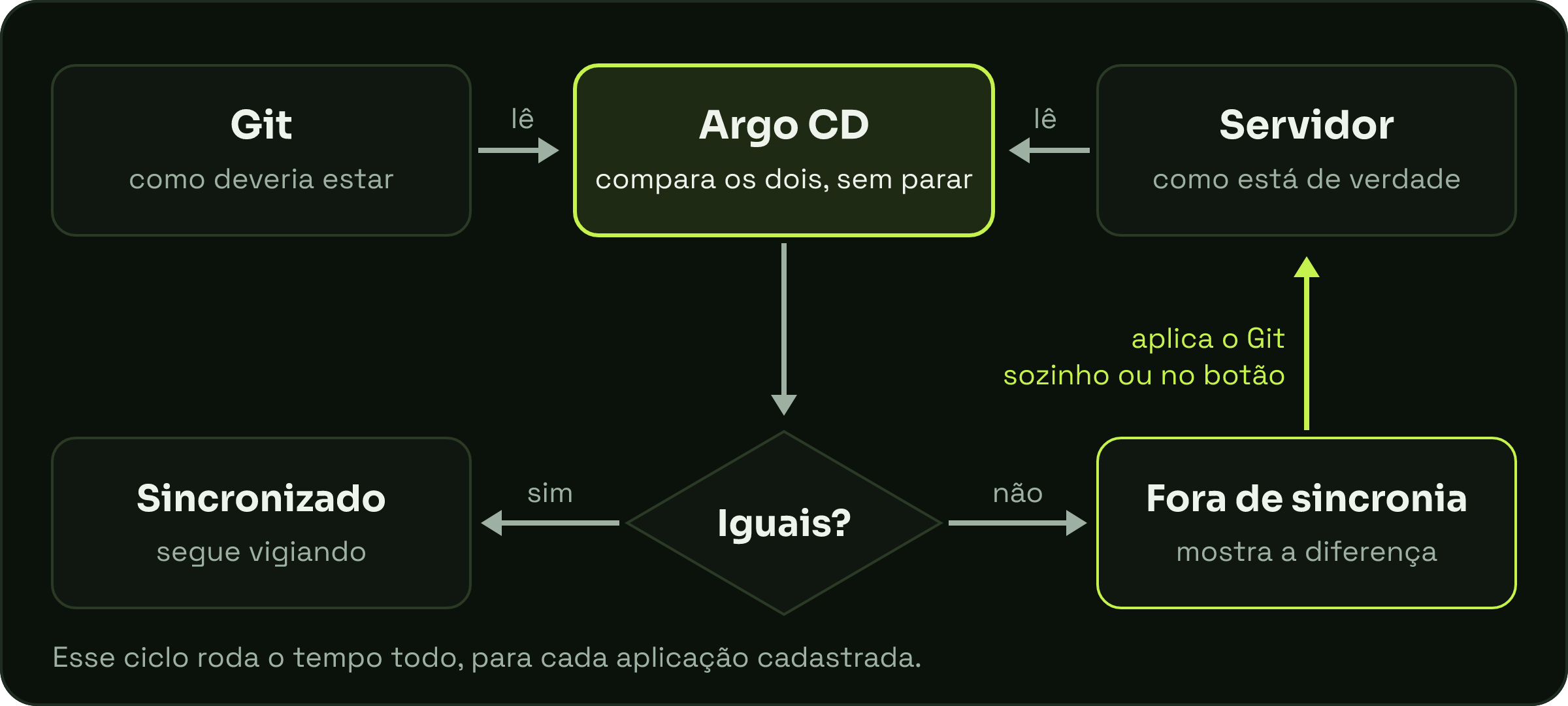
At that point, it shows exactly what’s different and can sync on its own or wait for someone to press the button. The team decides. The documentation also says it understands several configuration formats (Helm, Kustomize, Jsonnet or plain YAML files) and can track a branch, a version tag or an exact point in history.
What changes compared with the traditional way
The big shift is swapping push for pull. Today, at many companies, there’s an automated conveyor belt (the CI/CD pipeline) that tests the new version and, at the end, logs into the server and installs it. To do that, the pipeline has to hold the keys to production.
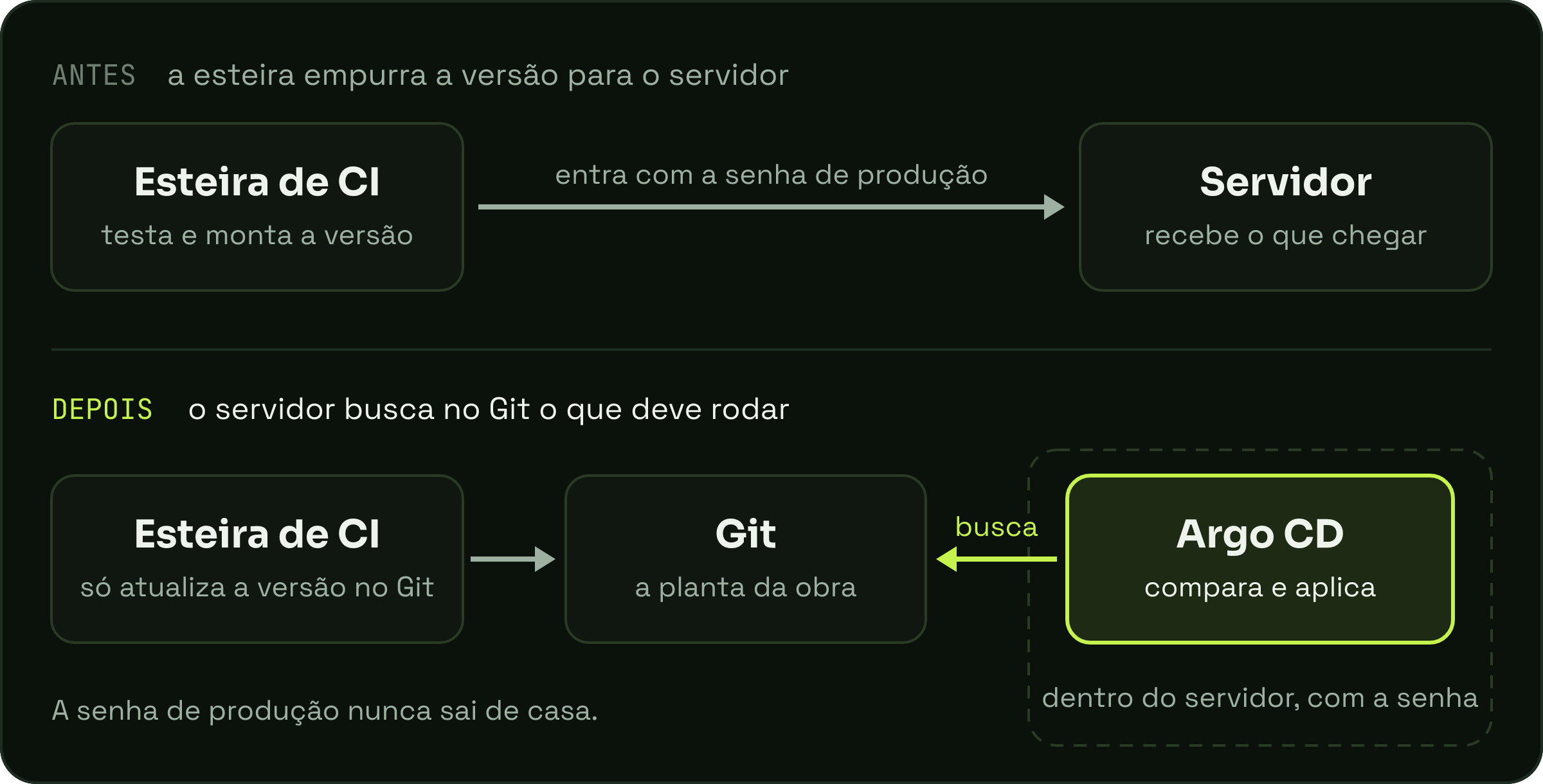
With Argo CD, the pipeline still tests and builds the new version, but it stops at Git: it only updates the blueprint. Argo CD, which already lives inside the cluster, is the one that carries the change to the server. The result: production keys don’t need to be scattered around, and the server never drifts from Git without someone noticing.
The improvements, according to the documentation
From the feature list in the official documentation, these are the ones that change the routine the most:
- Roll back to any version that has ever been in Git.
- Automatic drift detection between what should be running and what is.
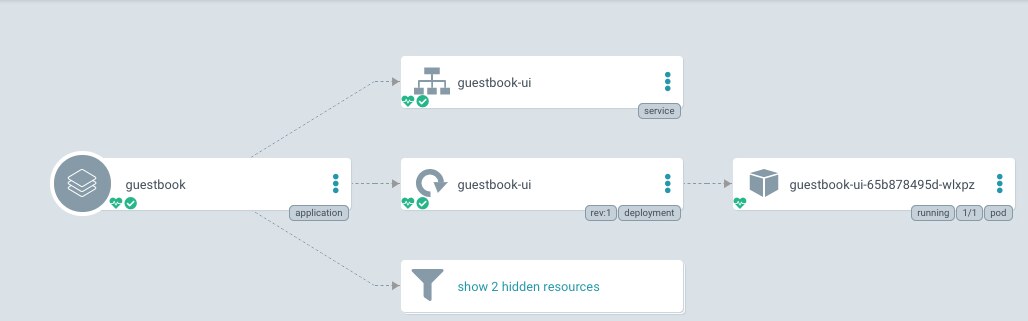
- Several clusters in a single dashboard, with each application’s health in real time.
- Single sign-on and per-team permissions, so everyone only touches what’s theirs.
- A record of who did what, with an audit trail of events and calls.
- Hooks before and after each sync, enabling strategies like rolling out the new version to only part of the users first.
How to start without overcomplicating it
If you already have a Kubernetes cluster, you can install Argo CD with two commands, straight from the documentation:
kubectl create namespace argocd
kubectl apply -n argocd --server-side --force-conflicts \
  -f https://raw.githubusercontent.com/argoproj/argo-cd/stable/manifests/install.yaml
After that, the easy path is:
- Set up a repository just for the configuration of what should run, separate from the system’s code.
- Register a small application, in a test environment, pointing to that repository.
- Start with manual sync, checking in the dashboard what Argo CD would apply before letting it apply.
- Remove the install-on-the-server step from the pipeline: it now only updates the version in the repository.
- Turn on automatic sync once the team feels confident.
The “Getting Started” guide in the documentation has the full walkthrough, with dashboard access and a sample application.
What gets better day to day
The most visible gain isn’t technical, it’s peace of mind. Putting a new version live becomes approving a change in Git. Something broke? Revert the change and the environment goes back on its own. No more “who touched the server?”, because everything goes through the history, with author, date and reason. Newcomers understand the environment by reading a repository. And rebuilding everything on a new server means pointing Argo CD at the same blueprint.
I started programming when I was 11, and since then I’ve seen plenty of deploys done by hand, with that knot in your stomach before hitting Enter. What changed is who does the heavy lifting. What stays the same is the age-old question: is what’s live really what we agreed on? With Argo CD, the answer is written down.