Best AI coding agent fully completed only 26% of tasks
A study with real programming requests shows the best AI agent meets 70% of requirements but fully finishes only 26.4% of tasks. What to review.
The top-ranked AI agent in a new test with real programming requests met, on average, 69.9% of each task’s requirements, but delivered the complete task in only 26.4% of cases. The figure comes from Co-Design Bench, a study published in late October by researchers from Alibaba Group together with Fudan University, Zhejiang University, the Chinese University of Hong Kong, Shanghai Jiao Tong University and Nanyang Technological University. The work drew attention this weekend in a report by The Decoder.
How the test worked
The researchers started from 26,314 real programming sessions and selected 273 tasks: changes to applications that already worked, some with video, audio or a document attached to the request. Each delivery was checked against 2,331 acceptance criteria written by specialists, which the models didn’t see while working.
Ten models were tested. None came close to fully delivering most tasks. And when a request mixed three or four kinds of change at once, all ten got worse.
What this changes for your company
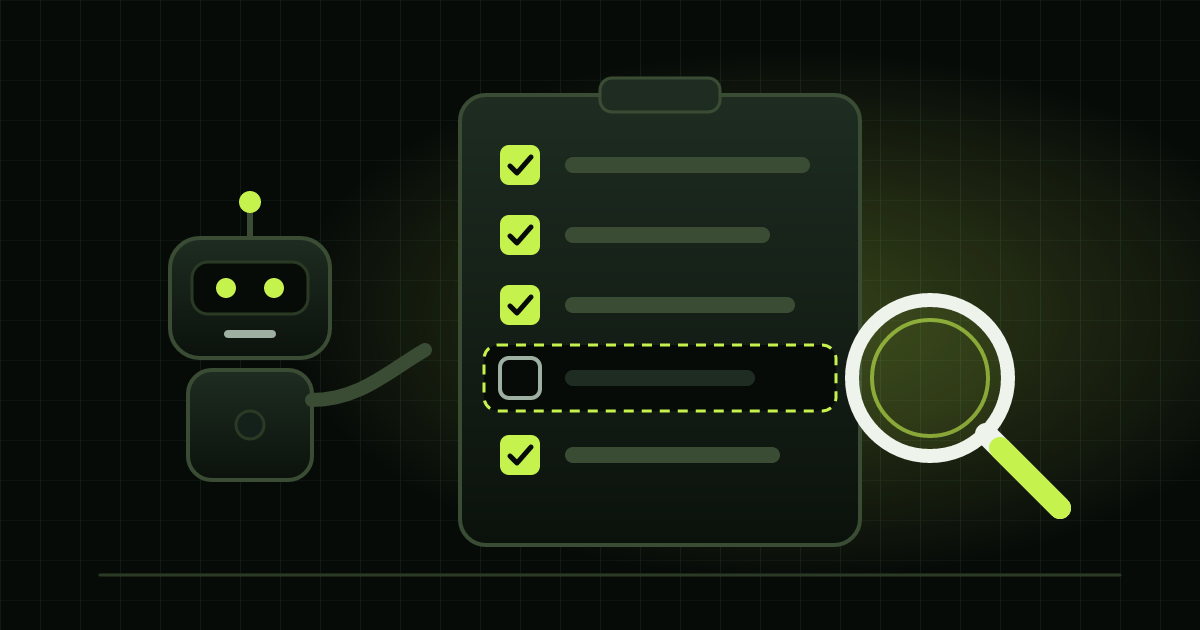
1. The risk is the “almost done” delivery. Code that doesn’t run is caught right away. The danger lies in code that works but missed a detail: a business rule, a validation, a field. That kind passes a quick glance and shows up later, in production or with the customer.
2. Define “done” before you ask. The study could only measure the failure because it had a list of criteria written in advance. The same applies at your company: every task handed to an AI agent needs written acceptance criteria, and a specific, named person checks them item by item before release.
3. Break up large requests. If performance drops when a request mixes many changes, the practical rule is to ask in smaller parts, each one reviewed before the next.
In 29 years of programming, I’ve learned that a project’s delay rarely lies in what was obvious. It lies in the detail nobody checked. With AI, that still holds, only faster.
Originally published on IWA7 Insights, IWA7 Digital’s blog, which is now part of Escovando Bytes.