The night a computer predicted the election and nobody believed it
On November 4, 1952, UNIVAC called Eisenhower's win on US TV with few votes counted. The prediction was so bold it was kept hidden for hours.
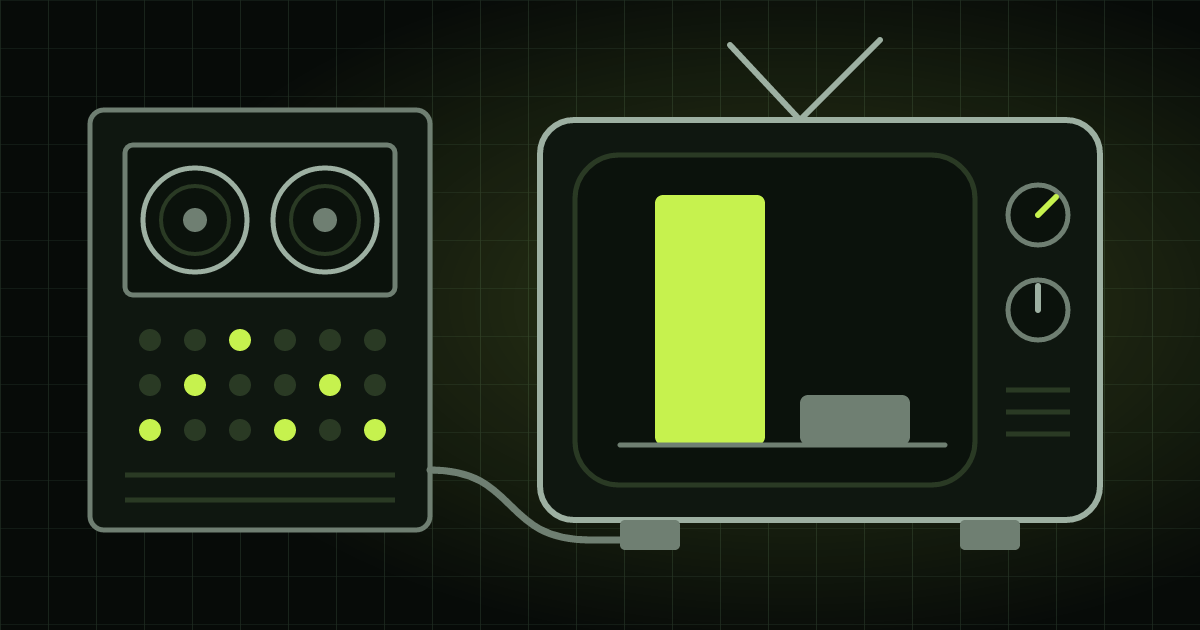
Election night, 30% of the votes counted, and someone on TV is already saying who’s going to win. How can they know with so few votes in?
That habit has a birthday. Today marks 74 years since, on November 4, 1952, CBS put a computer to work predicting the US election. The rest of the night featured a silent machine, an impatient reporter, a number that didn’t fit on the paper and a prediction almost nobody had the nerve to show.
The trauma of 1948
Four years earlier, the American press had embarrassed itself. The networks had Thomas Dewey as the winner, and Harry Truman won. The mistake became the famous headline “Dewey Defeats Truman”, in the Chicago Daily Tribune.
For 1952, with Republican Dwight Eisenhower running against Democrat Adlai Stevenson, the networks wanted something new. It was the first presidential election on coast-to-coast TV, and Walter Cronkite was making his debut as an election night anchor. The Gallup, Crossley and Roper polls treated the race as a tie. An “electronic brain” seemed like a great attraction. NBC got the Monrobot. CBS got UNIVAC.
The computer that didn’t fit in the studio
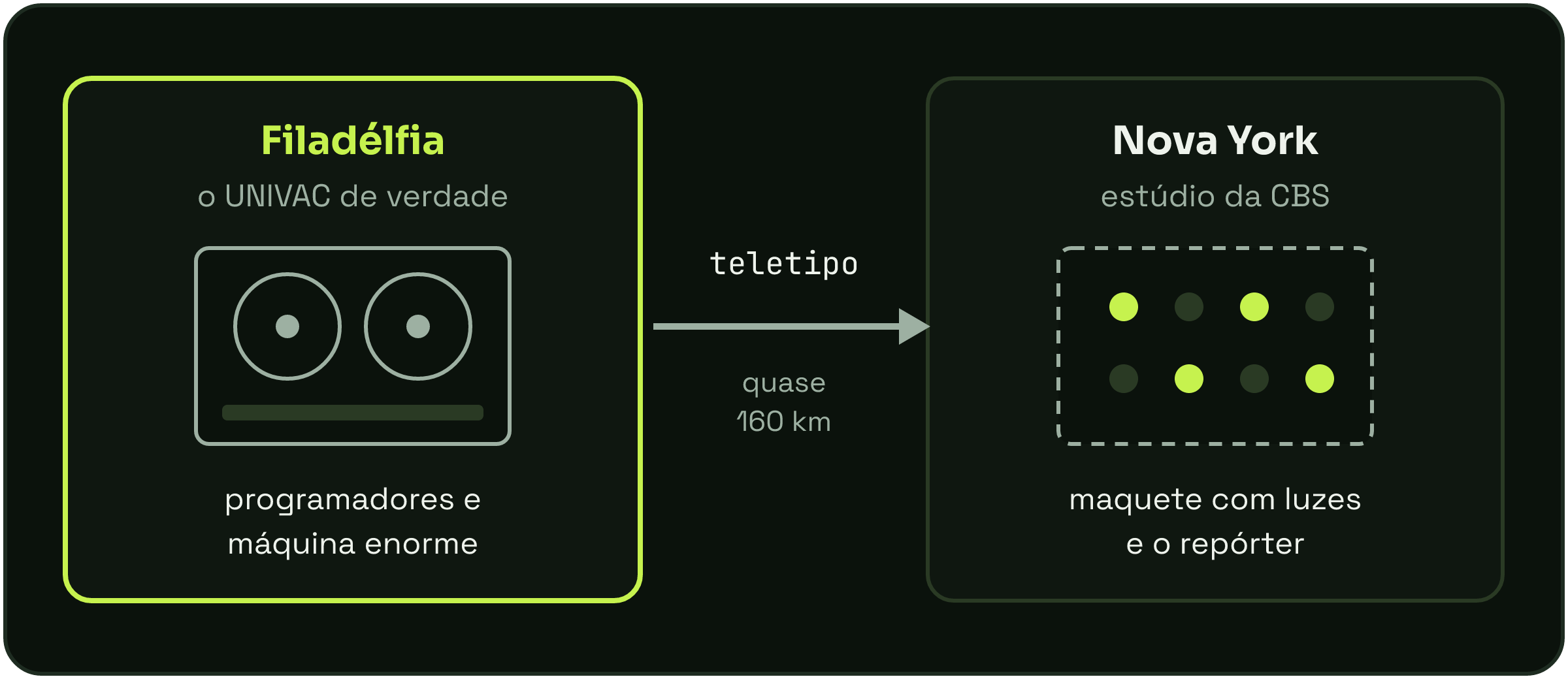
UNIVAC was the work of John Mauchly and J. Presper Eckert, the duo behind ENIAC. It was one of the first commercial computers: its first buyer, the Census Bureau, signed a contract in 1951. It had more than 5,000 vacuum tubes (parts that played the role chips play today), weighed more than 7 tons and was the size of a garage.
The result: it never left Philadelphia. So TV improvised. At Grand Central Terminal in New York, reporter Charles Collingwood stood in front of a mock-up of the console with blinking lights. Later, people revealed the lights ran on Christmas tree timers.
A memory made of sound
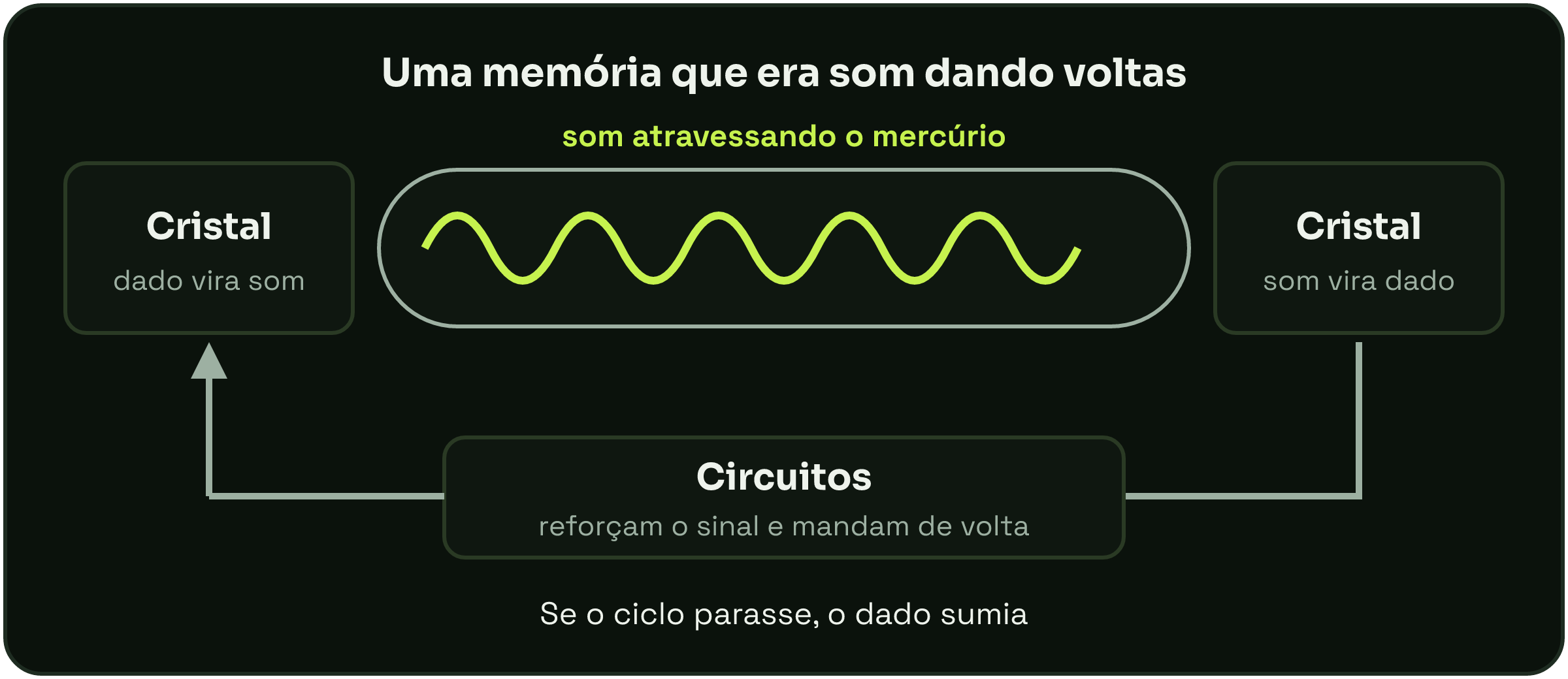
The machine’s most curious part never even appeared on TV. UNIVAC’s memory used columns of mercury. A quartz crystal turned the data into sound waves, which traveled through the liquid metal to another crystal. There they were read, boosted and sent back to the start. Nonstop.
Think of someone repeating a phone number out loud so they won’t forget it. That’s what it was, but with seven tanks of mercury kept at a controlled temperature. All of that held 1,000 “words” of 12 characters: 12,000 letters, a few pages of text.
100 to 1, or rather, 00 to 1
The logic behind the prediction was simple to explain: compare the early results with data from past elections. The program was handled by Max Woodbury, a mathematician at the University of Pennsylvania.
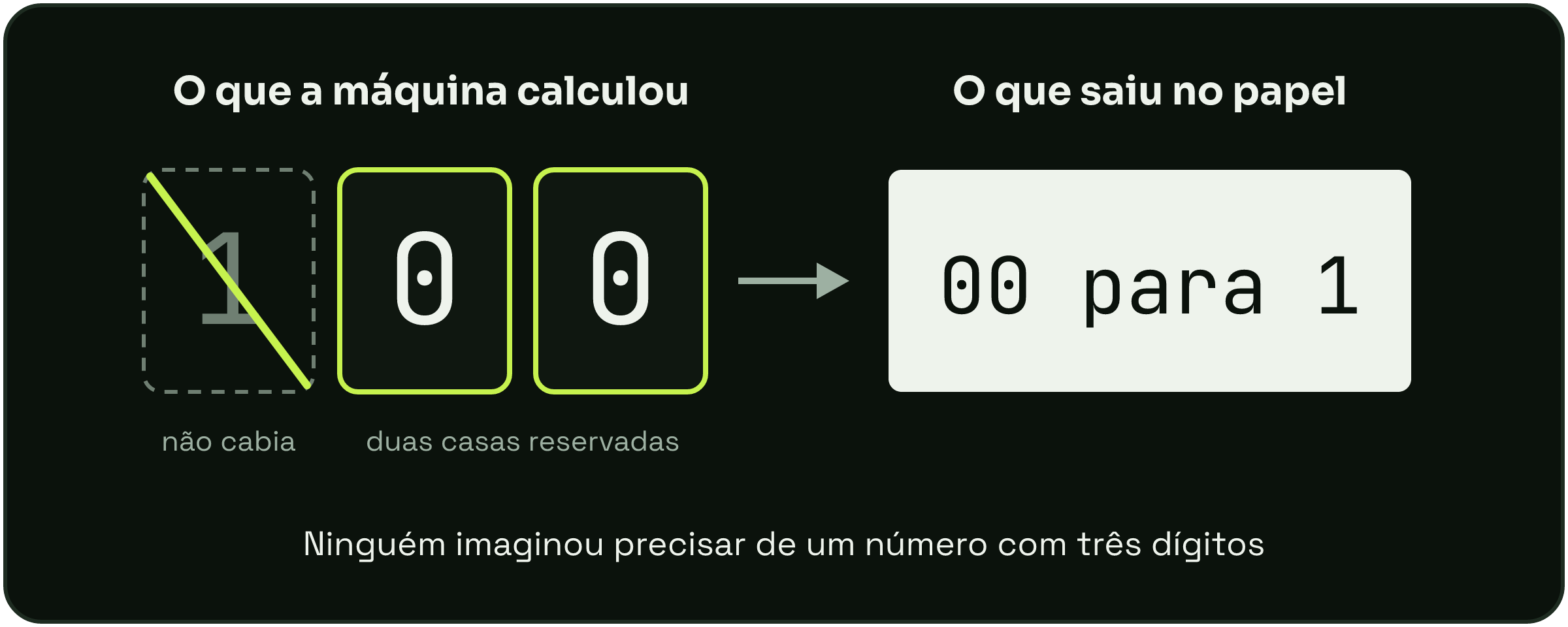
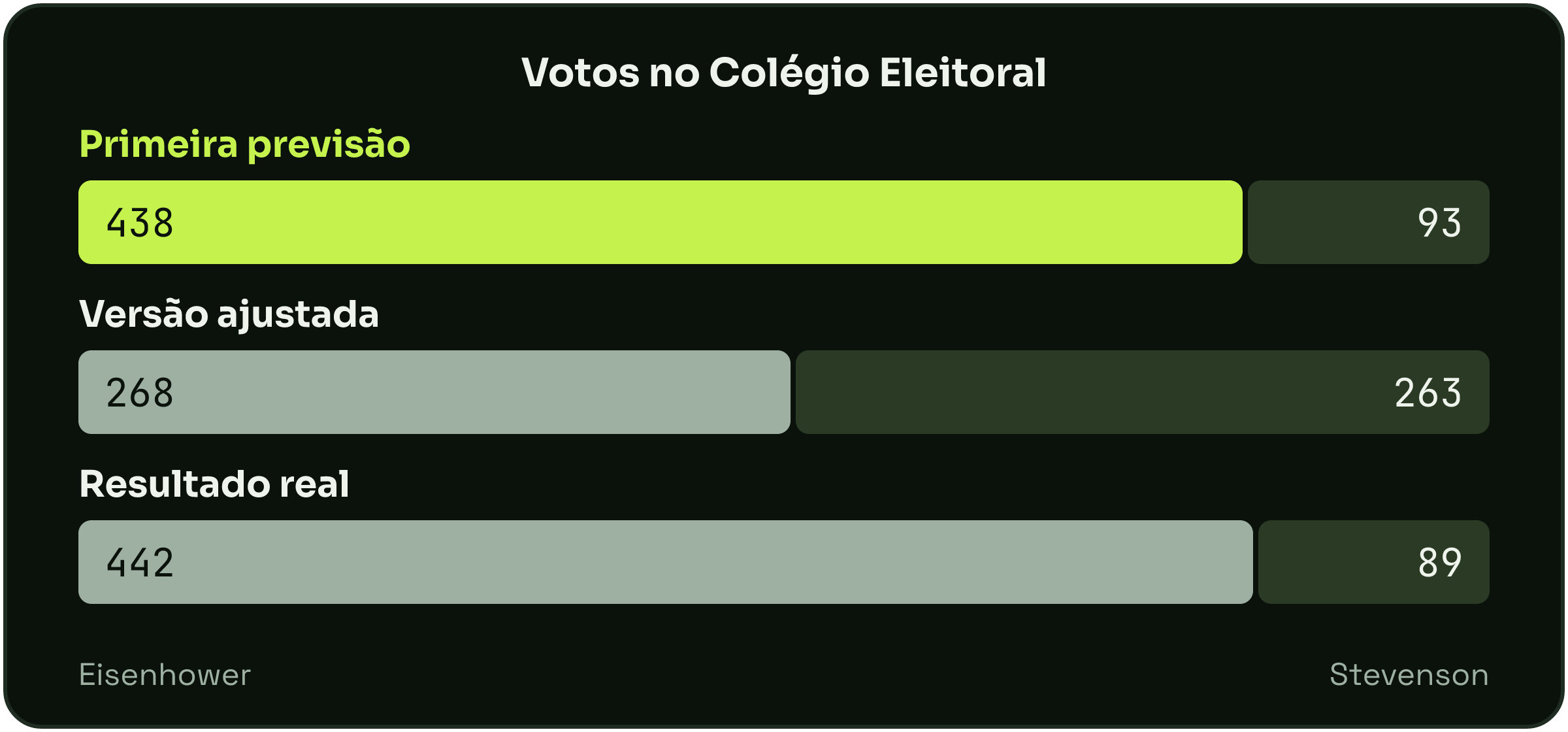
Early in the evening, the machine stayed silent, and Collingwood complained on air, calling the computer impolite. Then, around 8:30 p.m., with a little over 3 million votes counted, the answer came: Eisenhower with 438 votes in the Electoral College (the system of electors that chooses the president), against 93 for Stevenson. Odds of winning: 100 to 1.
But the printout read 00 to 1. The programmers had set aside two digits, because they never imagined needing three. If that sounds familiar, it’s a first-degree relative of the millennium bug.
The number nobody wanted to show
With the polls calling it a tie, that landslide looked like a malfunction. The prediction didn’t go on air. Who held it back? Accounts vary: NPR and historian Ira Chinoy point to the UNIVAC team, other accounts name CBS’s news director.
Then they tweaked the program, and the story splits again. One version mentions a “national trend” factor cut from 40% to 4%. Another says someone typed an extra zero into the New York results. Either way, the screen started showing something much tamer: 8 to 7 odds for Eisenhower and a score of 268 to 263.
The votes kept coming in, and Eisenhower pulled far ahead. After midnight, Art Draper, a representative of Remington Rand, the machine’s maker, admitted on air that the machine had been right, that they had been the ones who erred, and that next time they would believe it.
The official result: 442 to 89, with 39 states for Eisenhower. UNIVAC had been off by four votes.
Where the legend exaggerates
The story is usually told as a brilliant machine versus stubborn humans. Ira Chinoy, who spent years in the archives and wrote a book about it, says it was more complicated. The networks used the computers sparingly, and the early numbers, with no computer at all, already showed Eisenhower well ahead. Journalist Eric Sevareid even had some fun on air with the machine that was wrong for a while.
Humans got their revenge too. In 1956, ABC pitted pollster Lou Harris, armed with slide rules, against a computer. Harris won.
What that night left behind
Since 1952, computers and election night have been inseparable. In Brazil, where I live, the counting itself is another story (I’ve explained how Brazil’s electronic voting machine works), but the idea of looking at a part and imagining the whole is everywhere, from the weather forecast to an AI’s answer.
I started programming when I was 11, and what I like most about this story is that it has both classic mistakes in a single night. According to some accounts, the machine was fed bad data, typed by people. And smart people distrusted the right answer because it looked too strange.
Computers got incomparably faster. The question is still the same as in 1952: when it tells you something you didn’t expect, is the problem in the machine or in you?