Why doesn't your phone screen respond when you're wearing gloves?
The screen senses your body's electricity, not your finger's force. The idea came from a physics lab in Switzerland in the 70s, to control a particle accelerator.
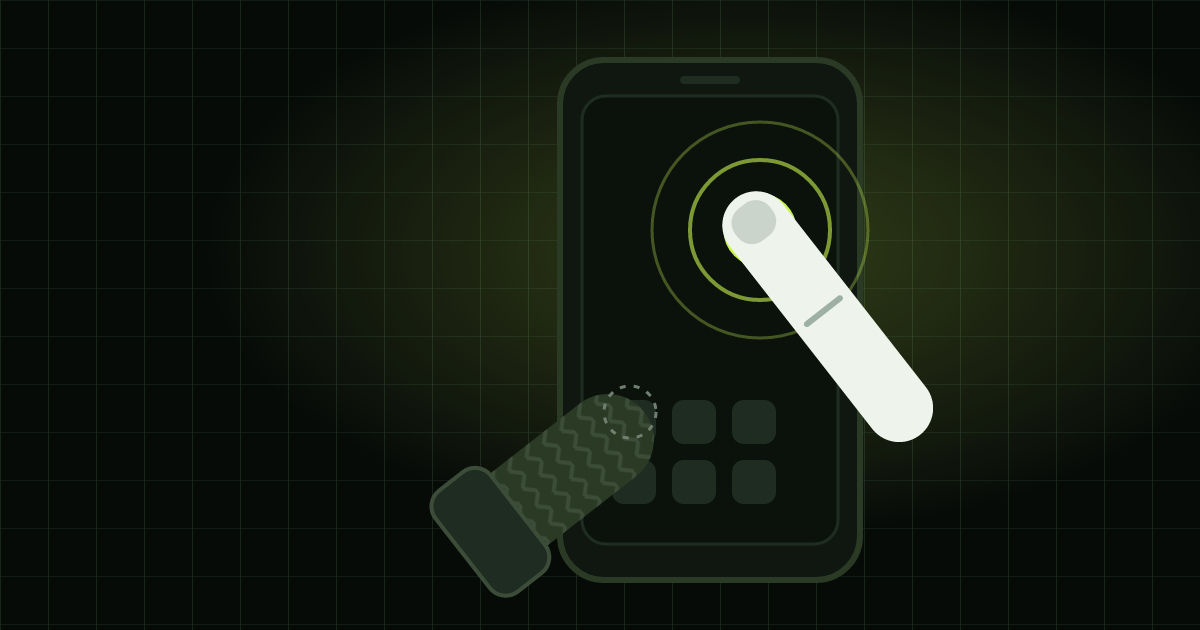
Cold morning, wool gloves on, and your phone rings. You swipe to answer and nothing happens. You try again, harder. Nothing. You pull the glove off with your teeth, touch the screen lightly and it responds instantly.
It’s not a defect, and the phone isn’t being stubborn. Your phone’s screen was never interested in how hard you press. It wants something else from you: your electricity.
The screen senses your body, not your push
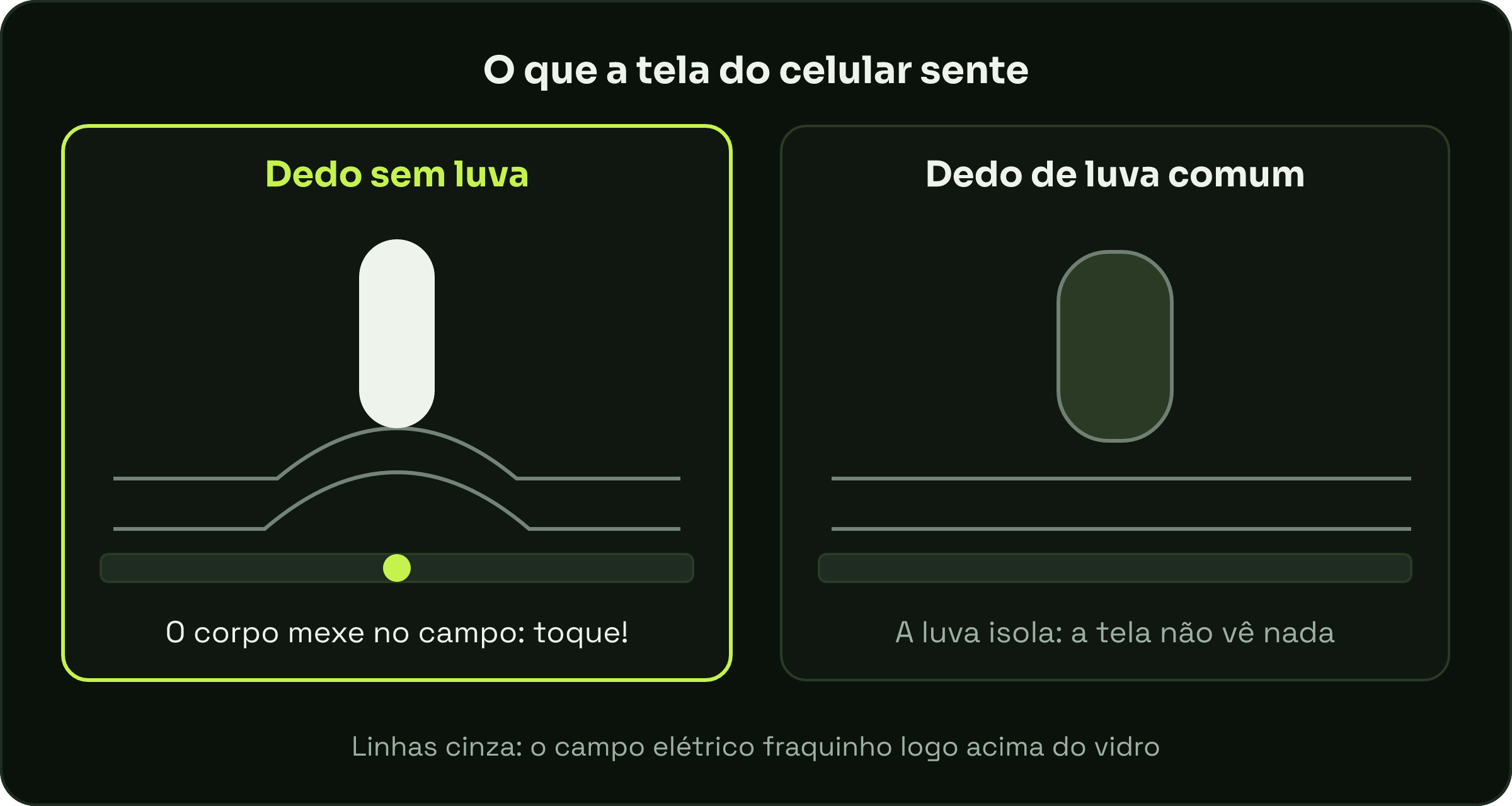
Most phone screens today are capacitive. The name sounds scary, but the idea is simple: the screen keeps a very weak electric field just above the glass, like an invisible net.
The human body conducts electricity (that is, it lets electricity flow through it). When your fingertip gets close to the glass, it “pulls” a little of that charge and disturbs the field at that spot. The phone measures that disturbance and figures out where you touched, as explained by the American consumer magazine Consumer Reports.
A curious detail from the same report: your finger doesn’t even need to actually touch. Getting very close is enough for the sensor to notice.
So why do gloves ruin everything?
Regular gloves are made of materials that don’t conduct electricity well, like wool, leather and synthetic fabrics, according to a touchscreen glove maker cited below. The glove sits in the way, like a wall between your body and the screen’s invisible net. As far as the phone is concerned, there’s no finger there at all.
Consumer Reports notes it’s not just gloves. Very dry hands and thick calluses get in the way too, because dead skin makes it harder for electricity to pass. The general rule, according to the report, is that anything that lowers your hand’s conductivity becomes a problem. In 2015, an expert from a sensor maker interviewed by the magazine admitted the industry had been fighting this for about 20 years.
That’s why “touch” gloves exist. One manufacturer explains that they have threads with metal fibers, like silver or copper, woven into the fabric to bridge your skin and the screen. In cheaper ones, those threads are only at the tips of a few fingers. A screen stylus does the same job: it carries electricity from your hand to its tip.
Before the phone, a particle accelerator
This screen that reacts to your body has an origin few people would guess: CERN, the big European particle physics laboratory on the border between Switzerland and France.
In the early 1970s, CERN was building a new particle accelerator, the SPS (a huge machine that makes tiny bits of atoms race at nearly the speed of light). Controlling a machine like that required a practical control panel, and the touchscreens that existed at the time were too bulky.
On March 11, 1972, CERN engineer Bent Stumpe handwrote a 16-page proposal with a different approach: buttons drawn on a screen that you trigger with your finger. Symmetry, a magazine from two US physics laboratories, describes the document as apparently the world’s first proposal for a capacitive touchscreen. The person who had asked for a leaner solution was Frank Beck, who later headed the SPS central control.

Wires thinner than a hair
Stumpe himself told the details, together with Christine Sutton, in a 2010 article for the lab’s magazine, CERN Courier.
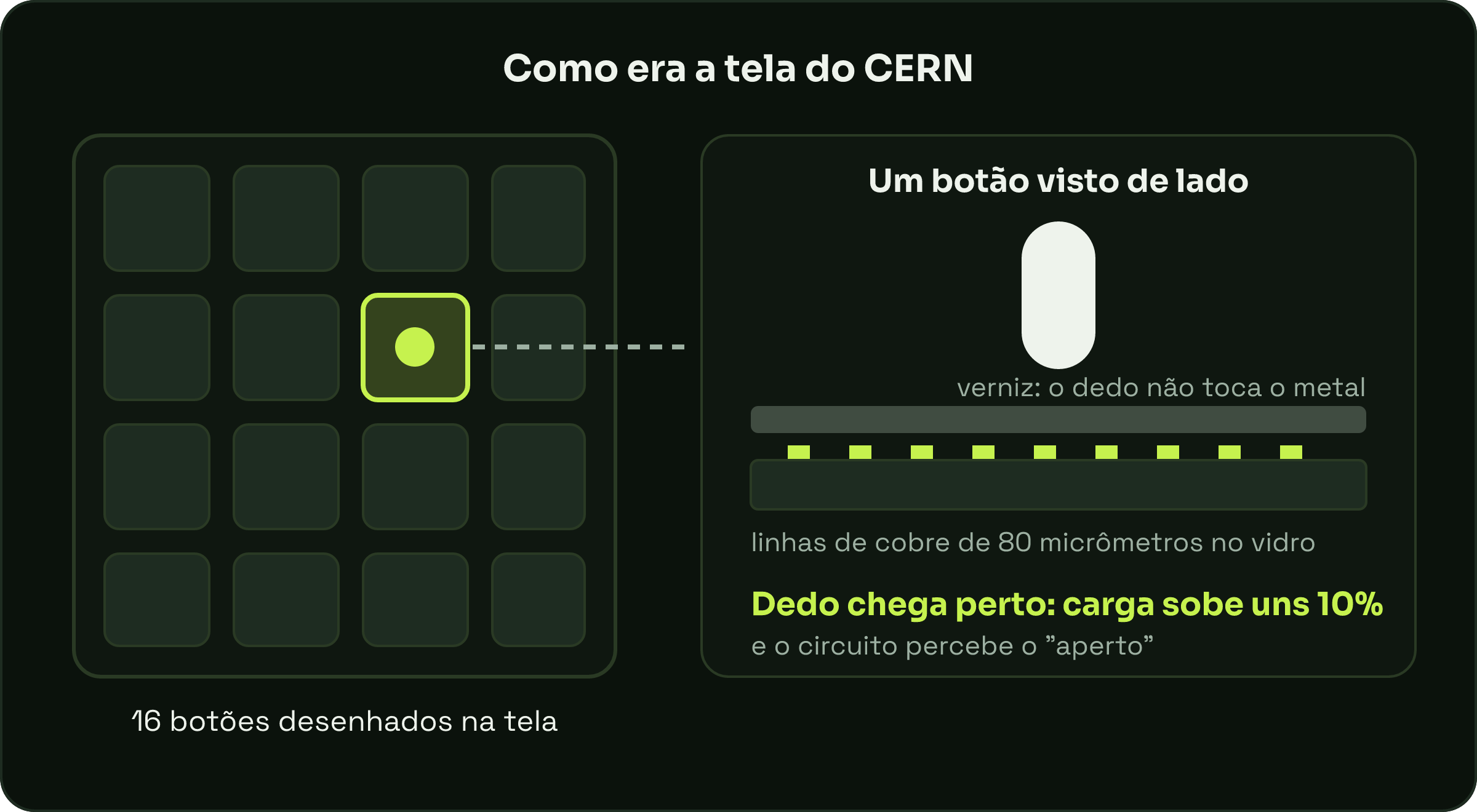
The first piece that proved the idea was ready in 1973, followed soon after by a glass prototype with 9 buttons. Each button was made of copper lines etched onto the glass, 80 micrometers wide (less than a tenth of a millimeter), practically invisible. When a finger came close, that button’s capacity to hold electrical charge rose by about 10%, and the circuit noticed the difference.
And here’s the clever part: on top of the lines there was a layer of varnish. The finger never touched the metal. In other words, from the very beginning the screen worked by sensing the body, not pressure. It’s the same reason your wool glove gets in the way today.
From the control room to the world
The SPS started operating in 1976 with its control room equipped with these screens. According to Symmetry, there were three 16-button screens, and some kept working for 30 years.
By 1977, CERN’s screens were already being sold to other institutes and companies, like the Rutherford Laboratory in the UK and Mitsubishi in Japan. And in 1980 the company NESELCO launched what CERN Courier calls the first commercial computer with a touchscreen.
A word of caution: “who invented the touchscreen” has more than one answer. A report by Embedded Computing Design says British engineer Eric A. Johnson had already created a touchscreen in 1965, at a radar research center in Malvern, England, with air traffic controllers in mind. Symmetry also notes that other touchscreens already existed, but were too bulky for what CERN needed. What CERN did that stands out was putting the capacitive screen to real work, every day, in a control room.
What this changes in your day
Fifty years after that control room opened, the principle is the same: the screen senses you, not your strength. That’s why pressing harder in frustration does nothing.
So, in the cold, wear touchscreen gloves or use a stylus. If the screen fails when your hands are very dry, the problem may be your skin, not the phone. And next time the screen ignores you, don’t take it personally: it just can’t sense you’re there.