Why is the save icon still a floppy disk?
Many people who click it every day have never seen a real floppy disk. The story of the object that vanished from stores and lives on in a button.
Open any word processor or spreadsheet and look for the save button. Chances are it’s a little square with a shutter on top and a label at the bottom. It’s a floppy disk. Many people click it several times a day without ever having held one.
How does an object that practically disappeared from stores live on in a button? The answer goes through an IBM lab in the 1960s, a race to shrink disks and a study done in 2025.
A flexible disk
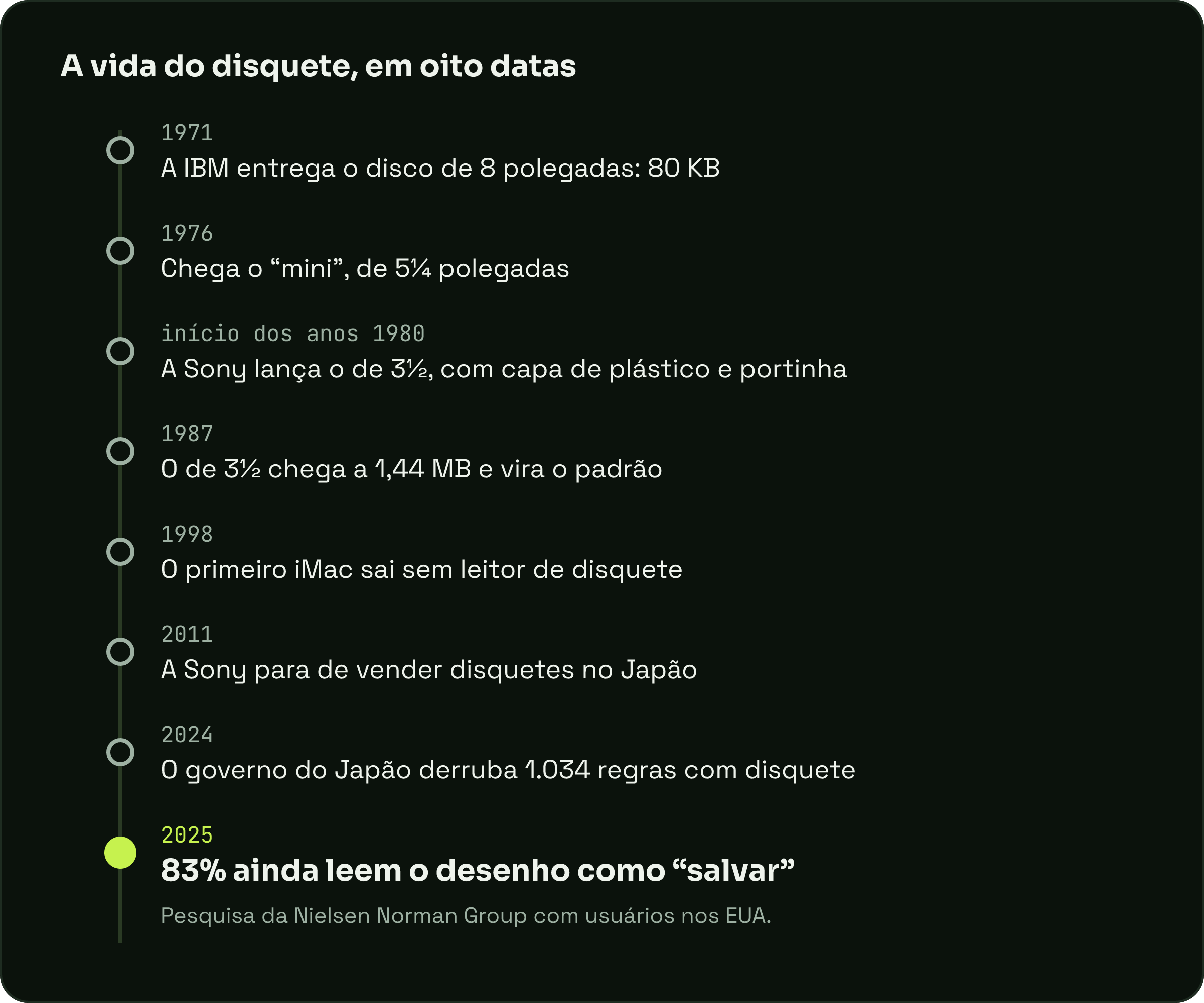
In 1967, at IBM in San Jose, California, manager Alan Shugart gave engineer David L. Noble a task: find a cheap way to load microcode, the basic instructions that tell a machine how to work, into a storage device for mainframe computers. In 1971, IBM shipped the first units of the solution, nicknamed “Minnow”, the Computer History Museum recounts.
It was an 8-inch magnetic disk, about 20 centimeters, that could only be read, not written. It held 80 KB, the equivalent of about 3,000 punched cards, according to the museum. The disk was flexible, hence the name: floppy. To keep it from getting damaged, it got a protective jacket, designed by Ralph Flores and Herbert Thompson.
IBM didn’t do it all in one go. The museum notes that Warren Dalziel was the main inventor of the drive, and the IEEE Computer Society credits Noble with leading the development of the company’s first floppy drives.
The race to shrink
In 1972, Shugart, by then out of IBM, helped launch at Memorex an 8-inch floppy with 175 KB, made for storing general data. In 1976, the company he founded, Shugart Associates, introduced the 5¼-inch “mini-floppy”, according to the Computer History Museum.
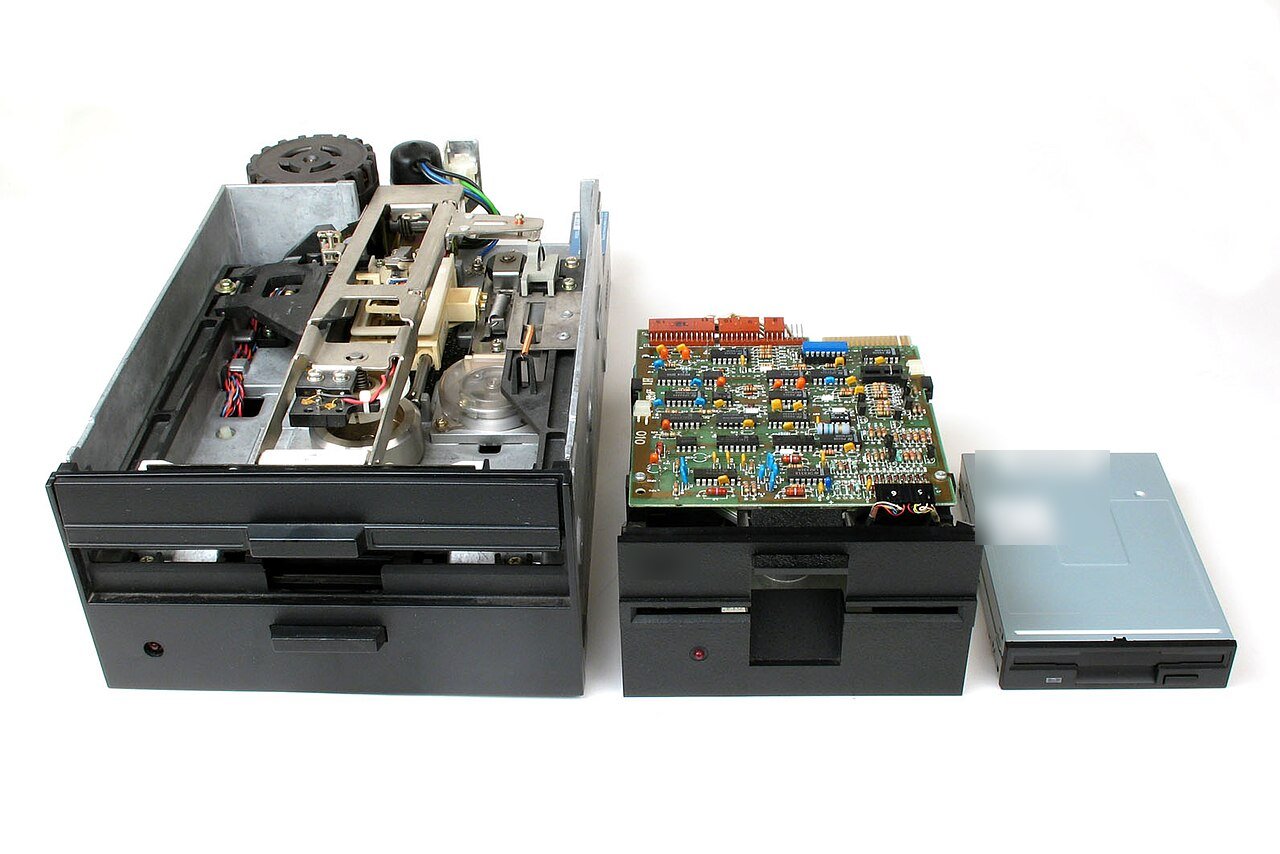
The next step came from Japan. In the early 1980s, Sony introduced the 3½-inch floppy, with a firmer plastic shell and a metal shutter to protect the disk, according to the Museum of Obsolete Media (some records say 1981, others 1982). In 1987 came the high-density version, with 1.44 MB, which soon became the standard on PCs and Macs.
That’s the floppy most people remember. And that’s exactly the one drawn on the button.
When saving meant writing to the floppy
For years, the floppy was where your work was stored and the way to carry files from one computer to another. Saving a document often literally meant writing it to the floppy stuck in the machine. When programs got toolbars with little pictures, it made perfect sense for the save button to show the object where your work would end up.
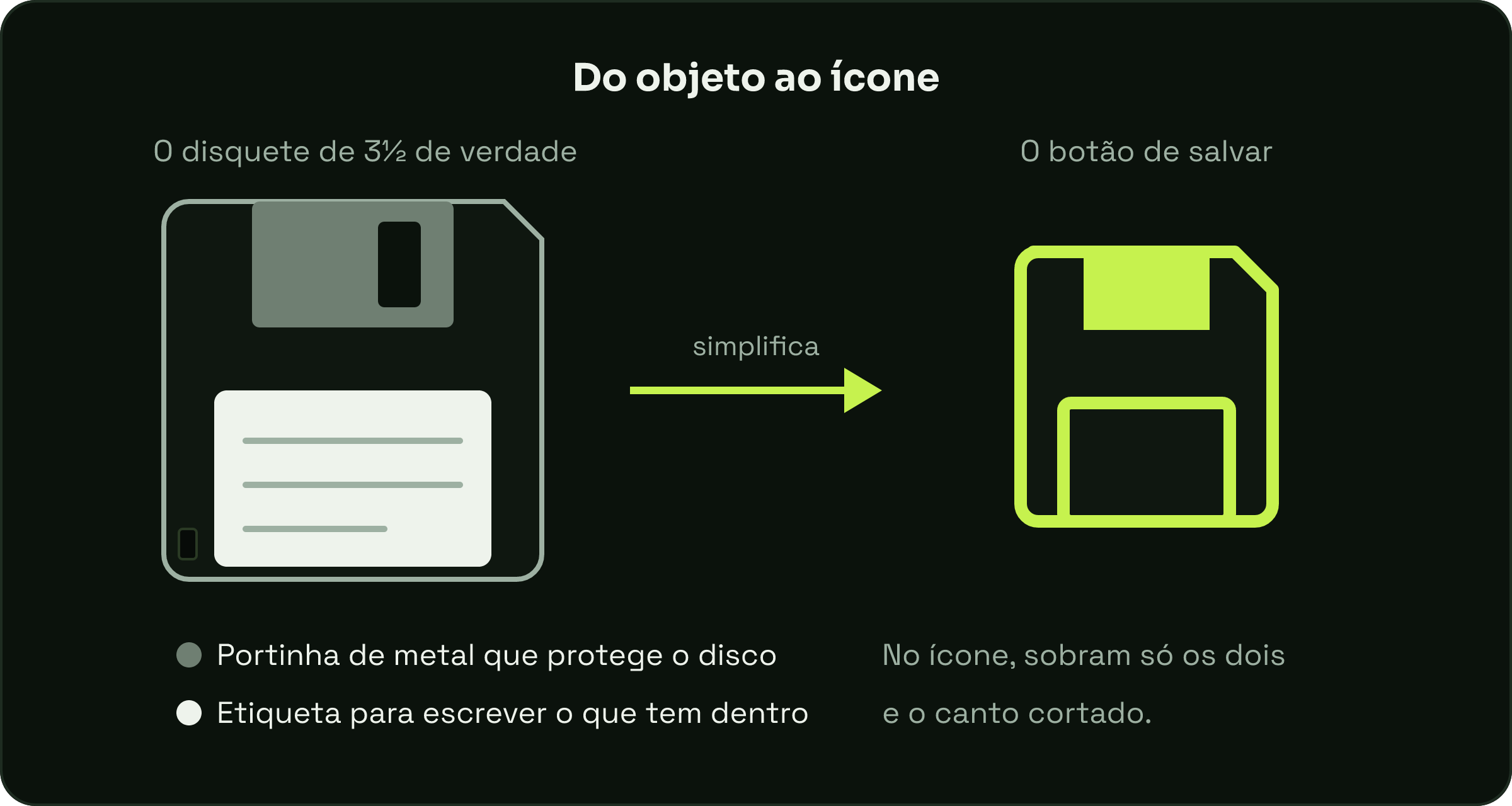
Notice that the icon doesn’t depict the 8-inch or the 5¼-inch, which were actually floppy. It depicts the 3½-inch, with its hard shell, as Computerworld observed in a 2012 piece about icons that aged. The drawing kept only the essentials: the shutter on top, the label at the bottom and the cut corner.
The object vanished, the symbol stayed
The end came slowly. In August 1998, Apple launched the first iMac without a floppy drive, betting on CDs and USB ports, recalls the Westport Tech Museum. In 2010, Sony, which had created the 3½-inch format, announced it would stop selling floppy disks in Japan in 2011, NPR reported.
And some held out much longer. In 2024, the Japanese government announced it had scrapped 1,034 regulations that still involved the use of floppy disks. Digital minister Taro Kono celebrated by saying the country had won the “war on floppy disks”, Silicon UK reported.
Meanwhile, the drawing stayed firmly on the buttons.
But do people still get it?
That question was put to the test. Researcher Kate Kaplan, of the Nielsen Norman Group, an American consultancy that studies how people use screens, showed the icon to participants in the United States and asked them what it would do. According to the article published in 2025, 83% answered “save”, and another 13% described the object, as in “disk” or “SD card”.
Her conclusion is curious: people recognize the icon because they’ve seen it many times on screen, not because they knew the floppy disk. The drawing became a kind of word. Nobody needs to know where it came from to understand what it means. The study itself adds a caveat: most participants were between 30 and 50, and people just starting out in the digital world may not be as familiar with it.
The floppy hiding in your computer
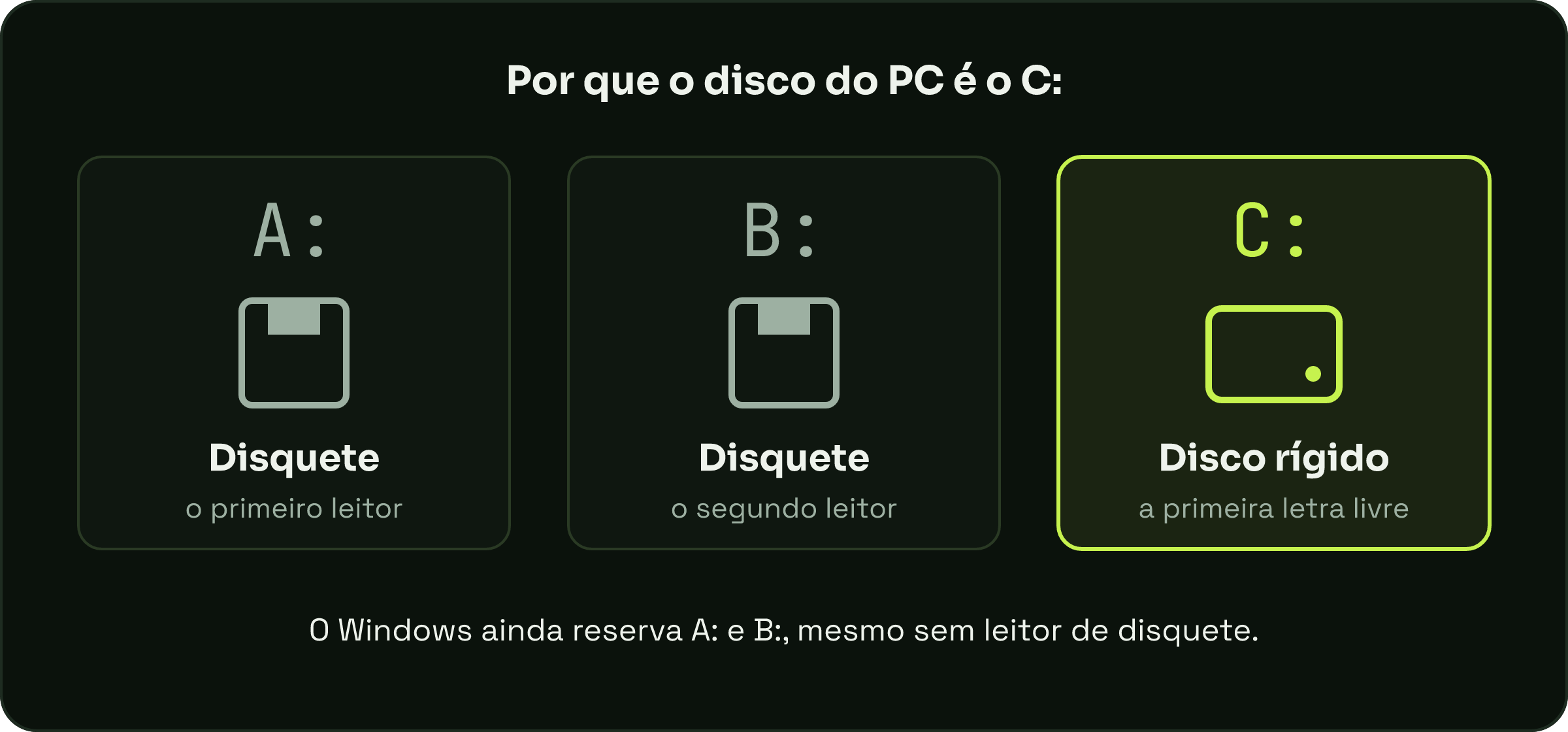
There’s another floppy fossil many people see without noticing. Why is the main drive on a Windows PC called C: and not A:? Because the letters A: and B: were reserved for floppy drives, explains Computer Hope. The hard drive got the first letter left over. And the reservation still holds, even on computers that never had a floppy drive.
What changed and what stays the same
I started programming when I was 11, and one thing you learn early is that computers are full of old decisions nobody remembers the reason for. The floppy is a perfect example: it vanished from desks but left traces on the save button and on your drive letter.
What changed is everything around it. Today files go to the cloud, many programs save on their own and the “place” where things are stored became abstract. What stays the same is the urge to have a button that says “keep this, please”. And, for now, that button still looks like a little plastic square with a metal shutter.